

Call of Duty, U.S. Gaming Capitalism, Cognitive Warfare, and the Militarization of Korean Youth: Washington’s War Planners and South Korea’s Far-Right Politicians
I don’t know much about video games, and I don’t play them. However, the latest release of the popular Call of Duty franchise caught my attention.
Former South Korean Justice Minister Han Dong-hoon 한동훈 urged President Lee Jae-myung to play the game or watch its campaign footage to understand the potential devastation of a real-world surprise military attack and to highlight concerns about national security preparedness.
In an October 23, 2026, Facebook post, Han pointed to the game’s depiction of Seoul becoming a battlefield and being reduced to rubble.
“The game Call of Duty begins with a surprise North Korean invasion that turns downtown Seoul into a battlefield. Some have expressed concern that the game promotes hostility toward North Korea. I recommend that the president play the game himself and experience firsthand the devastation that can result when national security preparedness is inadequate.”
Han Dong-hoon’s Facebook post (October 23, 2026): Read his original statement on Call of Duty and North Korea
Context: The campaign storyline of Call of Duty: Modern Warfare 4 features a scena
rio depicting a full-scale surprise invasion of South Korea, specifically Seoul, by North Korean forces. Han said he hoped the devastation would remain purely fictional, but argued that national security could only be protected through proper preparation rather than relying on hopes for peace.
1. Facebook Sees No Violation in the Glorification of War
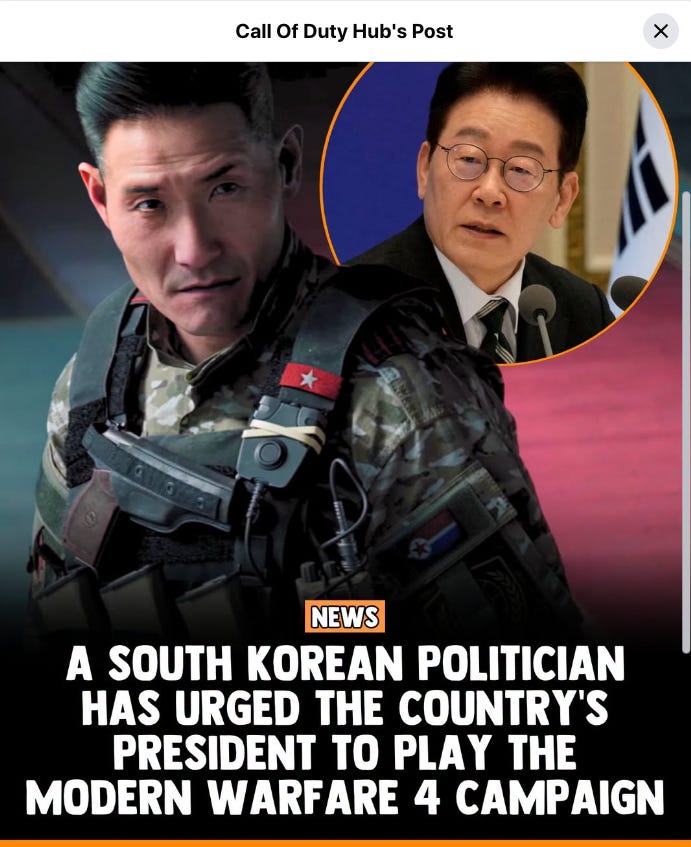
The official Call of Duty Facebook page also featured Han’s remarks to promote the game:
“A South Korean politician wants the country’s president to experience Modern Warfare 4’s campaign, arguing that it demonstrates the dangers of a potential invasion from North Korea.
Former Justice Minister Han Dong-hoon points to the game’s depiction of North Korean forces attacking South Korea and leaving parts of Seoul in ruins as a reminder of why military preparedness matters.”
I posted the following response on the official Call of Duty Facebook page:
“Han Dong-hoon’s warmongering statement promoting Modern Warfare 4 is outrageous and utterly irresponsible. Such reckless glorification of war must be unequivocally condemned. Turning the horrors of war into entertainment and political propaganda is disgraceful. This kind of warmongering rhetoric must have no place in our society. Han must be held publicly accountable. War is not a game, and the lives of millions of Koreans must never be treated as collateral damage in someone’s militaristic fantasy.”
I also reported the post to Facebook for violating its Community Standards, but Facebook’s review found no violation.
Call of Duty — Official Social Media Page: Call of Duty Official Facebook Page
2. Who Is the South Korean Politician Featured by Call of Duty?
The South Korean politician featured in Call of Duty’s social media post is Han Dong-hoon, a right-wing politician who rose to prominence as a close ally and political protégé of impeached President Yoon Suk-yeol.
Han was groomed by Yoon when the latter was chief prosecutor, serving as one of his closest associates in the prosecution service. He played a prominent role in investigations and prosecutions targeting liberal politicians and others viewed as political rivals of Yoon. He was widely regarded as Yoon’s political protégé and potential successor.
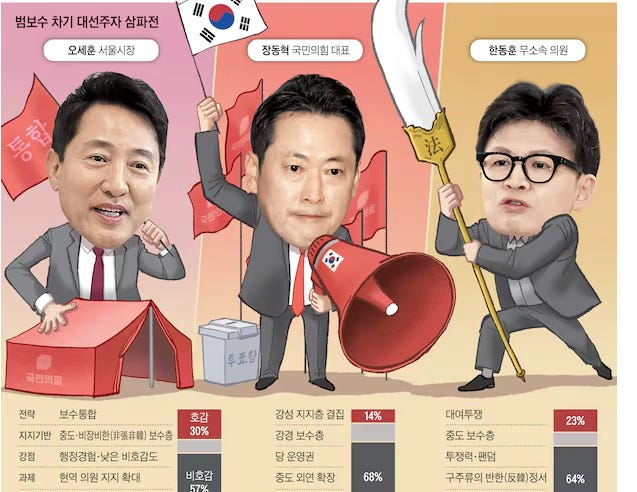
Today, Han is among three right-wing South Korean politicians whom Washington’s right-wing circles are reportedly considering as potential future presidential contenders. The three conservative politicians featured in the Chosun Ilbo article above are competing for Washington’s attention, each zealously advocating an anti-North Korea, pro-U.S. platform.
3. Washington’s Approval: The Lifeline of South Korea’s Conservative Politics and Anti-North Korea Agenda
What do these three politicians—and, for that matter, virtually any conservative politician in South Korea aspiring to seize power—have in common? Their political ambitions are closely tied to demonstrating loyalty to Washington’s anti-North Korea agenda.
Unlike conservative parties in many other countries, South Korea’s conservative political establishment has historically depended on U.S. political and strategic support for its legitimacy, power, and survival. Its political roots, rise to power, and continued influence have been deeply intertwined with Washington’s Cold War agenda on the Korean Peninsula.
From Syngman Rhee to Park Chung-hee, Chun Doo-hwan, and Yoon Suk-yeol, anti-North Korean propaganda and alignment with U.S. strategic priorities have served as recurring pillars of conservative political mobilization and power.
4. Is the Call of Duty Game Recommended by Han Dong-hoon a Form of Cognitive Warfare?
Deputy Secretary of Defense Elbridge Colby reportedly said that U.S. forces would not fight North Korea alongside South Korea—that South Korea would have to fight alone. But is this image merely wishful thinking?
5. “Call of Duty Is a Carefully Constructed Piece of Military Propaganda, Designed to Advance the Interests of the U.S. National Security State.”
If we recognize that video games are not exempt from cognitive warfare—psychological and information warfare—it is reasonable to ask whether a game depicting a future war on the Korean Peninsula might reflect an American strategic scenario.
In fact, the CIA and the U.S. Department of Defense have long used films, television dramas, music, and other forms of popular culture to shape public perceptions and cultivate support for war. The U.S. military has even developed video games to encourage recruitment during the Iraq War.
I lack expertise in this area, so I benefited from the references and comments shared by my expert comrades, which I include below.
6. Call of Duty: Military Propaganda and the U.S. National Security State
An investigation into Activision Blizzard’s key personnel, their connections to state power, and documents obtained through the Freedom of Information Act (FOIA) argues that Call of Duty functions as an instrument of U.S. military propaganda, advancing the interests of the national security establishment.
As the investigation explains:
“Video games are a massive business and a huge center of soft power and ideology. The medium makes for particularly persuasive propaganda because children and adolescents consume them, often for weeks or months on end, and because they are light entertainment.”
The investigation also documents the U.S. military’s longstanding collaboration with the video game industry. The U.S. Marine Corps (USMC), for example, collaborated in the production of Call of Duty 5 in 2008.
According to researcher Tom Secker, these partnerships allow the military to use video games as recruitment tools, effectively turning them into a “recruitment portal.”
References:
Original Article (MintPress News): Call of Duty Is a Government Psyop: These Documents Prove It
Archived Copy: Archive.is Snapshot
Syndicated Discussion / Summary (UnHerd): UnHerd Analysis
Academic & Media Review (Project Censored): Documents Prove Call of Duty Video Game Franchise Is “Military Propaganda”
7. The CIA’s Role in Anti-North Korean Films
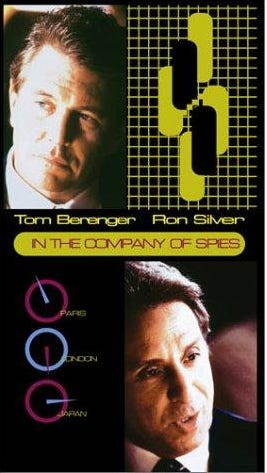
In addition to widespread anti-North Korean propaganda emanating from the U.S. and Japan, some films have also involved the CIA directly. A case in point is Spies, a film released on October 25, 1999, which attracted attention as the first movie for which the CIA, since its establishment, opened its headquarters for filming and allowed agency employees to appear as extras. The film depicted CIA operatives overcoming numerous obstacles to rescue a colleague detained by North Korean authorities after obtaining intelligence about a North Korean conspiracy.
The CIA-supported film Spies, released in 1999, may therefore be viewed as part of a broader effort to frame North Korea as an enemy and prepare the public to accept a potential future military confrontation.

8. Wilkerson: U.S. Was Preparing for War with North Korea in 2002
Colonel Lawrence Wilkerson, who served as chief of staff to Secretary of State Colin Powell during the George W. Bush administration, recalled that he had been briefed at the Pentagon about U.S. preparations for war against North Korea.
Wilkerson, a veteran of the U.S. Navy’s Pacific Command who served in South Korea, Japan, and Hawaii, recalled:
“I was briefed we were going to war with North Korea, we were going to war with Iraq, that’d be followed by Syria, that’d be followed by Iran, although we wouldn’t have to do probably Syria and Iran because they’d quake in their boots after we did Iraq.”
— Colonel Lawrence Wilkerson, former chief of staff to Secretary of State Colin Powell.
Source: The Diplomat, “How North Korea Deterred an American Invasion in 2002” (January 2024)
Wilkerson recalled several important developments:
Neoconservative hostility toward North Korea: During his time at the State Department, neoconservatives such as John Bolton persistently advocated aggressive military and hostile measures against not only Iraq and Syria but also North Korea and Cuba.
Pentagon briefings on North Korea: Having served in South Korea and participated in military exercises such as Team Spirit, Wilkerson had firsthand exposure to Pentagon briefings on military operations against North Korea. He said he was appalled by the recklessness of the administration’s foreign policy.
The neoconservative agenda: He discussed Paul Wolfowitz’s strategic thinking in the 1990s and the Pentagon’s post-2001 plan to strike seven countries within five years: Iraq, Syria, Lebanon, Libya, Somalia, Sudan, and Iran.
9. Cognitive Warfare and the Strategy of Imperial Power
One of the tools of imperial power is the ability to influence public opinion across countries and generations. The United States has developed sophisticated means of shaping perceptions through media, social networks, and influential public figures.
American military power has faced growing constraints, while public support for war has weakened. Washington has increasingly sought to rely on allies to advance its strategic objectives.
The problem is that a war involving a nuclear-armed power such as the United States can quickly escalate into a nuclear confrontation. Yet when Washington insists, as it has in the case of Ukraine, that it is not itself at war with Russia, its allies may be left to bear the direct costs of fighting.
South Korea cannot confidently assume that it would defeat China or North Korea in a conventional war. The opposite outcome is also a serious possibility.
If South Korea and the United States were to bomb North Korea, they could face the same problem. If the United States avoids becoming a direct belligerent, it may prioritize exhausting an adversary’s military resources while its ally bears the human and material costs of a prolonged conflict, as Ukraine has experienced. South Korea could find itself unable to end a war even when it desperately wants peace.
10. Why Colby’s Position Is So Dangerous
This is why the reported position of Deputy Secretary of Defense Elbridge Colby—that U.S. forces would not fight North Korea alongside South Korea—is so dangerous.
If South Korea is expected to fight North Korea alone, there is no obvious justification for the United States to retain wartime operational control of South Korean forces. Yet Washington continues to seek to preserve its command role while also discussing the possibility of U.S. forces in Korea focusing on a conflict with China.
In such a scenario, South Korea could become entangled in a conflict with China while also facing war with North Korea.
Against this backdrop, the appearance of a video game centered on war on the Korean Peninsula, aimed at an audience of young South Koreans, raises legitimate questions about whether popular entertainment could help condition the public to accept war.
11. Training Young Koreans to Fight North Korea Through Video Games
If we apply the pattern of using films and television to portray future adversaries as evil, video games may serve a similar purpose in preparing the public for war.
In South Korea, young people of military service age are among the most enthusiastic consumers of shooting games. A game built around war on the Korean Peninsula could familiarize them with fighting North Korean soldiers and encourage them to view such combat as normal or even exciting.
South Korea’s Constitution, however, establishes peaceful reunification as a national objective:
“The Republic of Korea shall seek unification and shall formulate and carry out a policy of peaceful unification based on the principles of freedom and democracy.”
— Article 4 of the South Korean Constitution.
School curricula have accordingly included education for peaceful reunification. Many South Koreans in their 30s and 40s received this education, while older generations may be more likely to have grown up with strong anti-communist attitudes.
If the objective were to make young South Koreans more willing to kill North Korean soldiers, a shooting game could be an effective means of reshaping their perceptions.
The more young Koreans practice killing North Korean soldiers in virtual combat, the easier it may become to regard North Koreans not as fellow Koreans with whom peaceful reunification remains possible, but as enemies to be defeated in war.
This is the kind of psychological conditioning that can be described as cognitive warfare. Given that the CIA has conducted influence operations targeting American citizens, why should we assume that allied populations are exempt from such efforts?
12. Whose Security Does Han Dong-hoon 한동훈 Serve? The U.S. War Machine, the Computer Gaming Industry, and the Manufacturing of an Anti-North Korean Enemy?
Recommending that the president play a war game simply to learn the importance of national security, without considering its broader geopolitical context, reveals that this South Korean politician is already being recruited by Washington. He is taking Washington’s test and vying for its attention. Among the three right-wing politicians mentioned above, we will see a competition over who can demonstrate the greatest loyalty to Washington.
Washington may welcome political leaders who respond to its demands without questioning the consequences for their own country. The experience of Ukraine’s right-wing political forces, which have supported a war against Russia while relying on American backing, offers a warning about the dangers of allowing a country’s strategic priorities to become subordinate to those of a more powerful ally.
South Korea must ask a fundamental question: Is its purpose to defend the lives and sovereignty of its people, or to become a frontline battleground in America’s strategic confrontation with China and North Korea?
Referenced Publications & Educational Initiatives
1. “Americans once carpet-bombed North Korea. It’s time to remember that past”
Author: Bruce Cumings
Publication: The Guardian (August 13, 2017)
Original URL: https://www.theguardian.com/commentisfree/2017/aug/13/america-carpet-bombed-north-korea-remember-that-past
2. “The Korean War You Never Saw”
Author: Tim Shorrock
Publication: Empire Blues / Korea Policy Institute (July–August 2026)
Original URLs:
3. “Ending the Korean War Teaching Initiative”
Organization: Korea Policy Institute (KPI) Educational Curriculum & Syllabus
Original URL: https://www.kpolicy.org/ending-korean-war-teaching-initiative
Simone Chun
한반도를 전쟁의 불바다로 묘사한 비디오게임 《콜 오브 듀티》를 권장하는 한동훈을 규탄한다. 브루스 커밍스 교수는 미국이 한때 북한 전역을 융단폭격했으며, 미 공군이 3년 동안 북한 주민들에게 ‘폭격과 폐허의 비’를 퍼부었다고 지적했다. 이는 북한 주민들에게 살아 있는 악몽이었으며, 오늘날까지도 북한 사회에 깊은 역사적 상흔으로 남아 있다.
이러한 미국의 참혹한 전쟁 범죄와 역사적 비극에 대한 성찰은커녕, 무지와 극우적 광기에 사로잡힌 망언을 일삼는 한동훈을 강력히 규탄한다. 미국 극우 세력의 지지를 등에 업고 차기 대선을 준비하려는 한동훈의 행태를 규탄한다.
북한에 12차례 넘게 무인기를 침투시켜 한반도 전쟁 위기를 조장하고, 이를 통해 정권을 유지하려 했던 윤석열과 무엇이 다른가?
한반도의 전쟁 위기를 조장하며 미국의 패권 유지에 충실한 꼭두각시 역할을 통해 권력을 유지하려는 국민의힘은 해체되어야 한다. 그렇지 않으면 제2, 제3의 윤석열이 등장하고, 조희대 대법원은 내란 세력에게 면죄부를 주는 사법적 방패막이로 전락할 것이다.
이재명 정부를 임기조차 채우기 전에 무력화하고, 다시 극우 정권을 탄생시키려는 것인가? 대한민국을 또 다른 우크라이나로 만들려는 한미 극우 세력의 연대와 그 실체를 낱낱이 밝혀야 한다.
이재명 정부와 빛의 혁명을 이뤄낸 국민은 단결해야 한다. 한반도의 평화와 민주주의, 주권을 위협하는 한미 극우 연대를 반드시 분쇄해야 한다.